04.05.2026
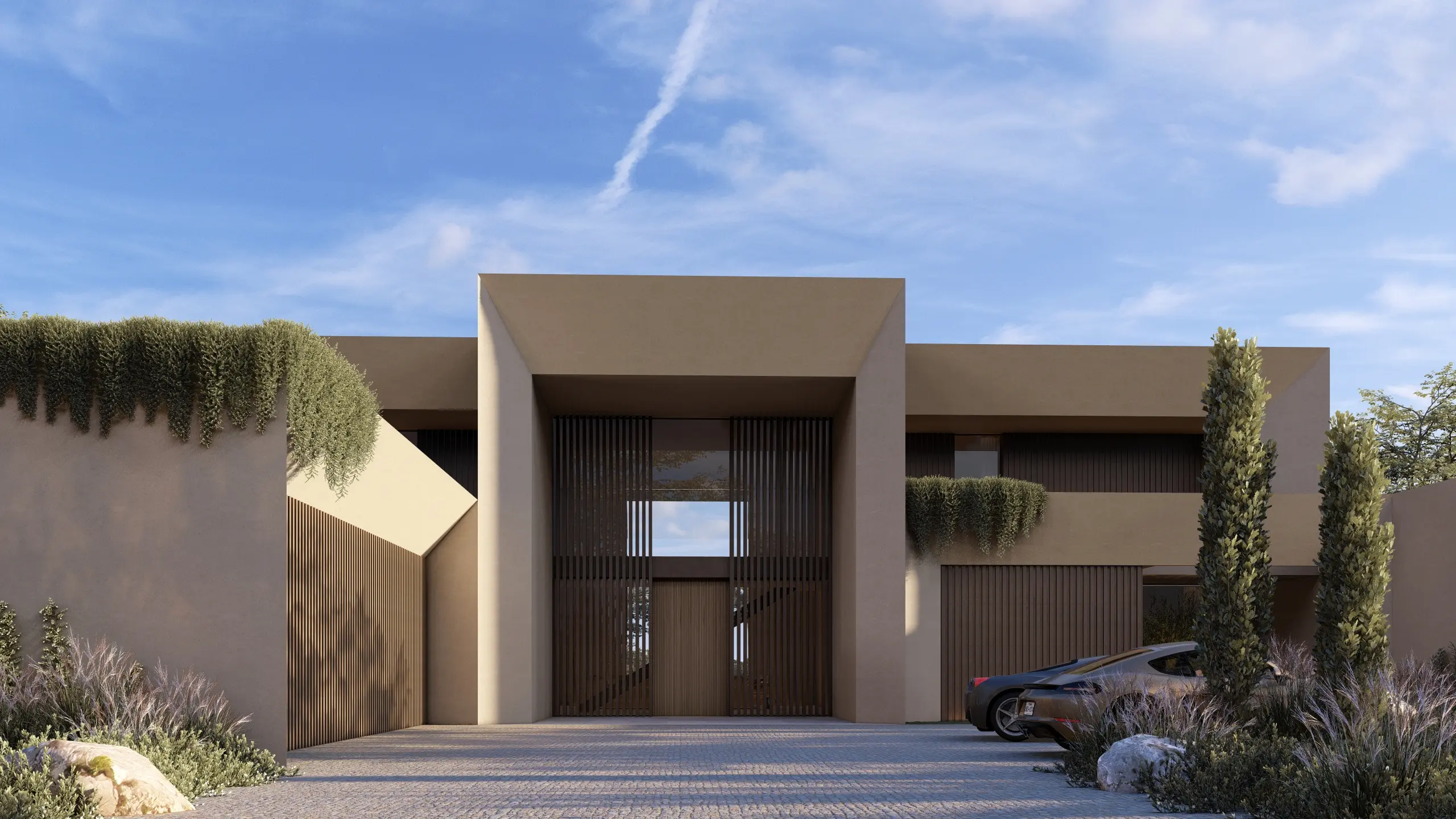
This is how we are designing villas in Texas from Mallorca
Reinterpreting an architectural approach within a different residential context
Their objective was not to commission a single home, but to find an architectural approach capable of adding real value to the designs they had in mind. It was during this search process that they connected with our studio and proposed developing this line of villas together.
Rather than a one-off commission, what they envisioned was adapting a way of understanding architecture to a different context. From that point on, a collaboration began that we continue to develop today, with an ongoing working structure and a shared vision.
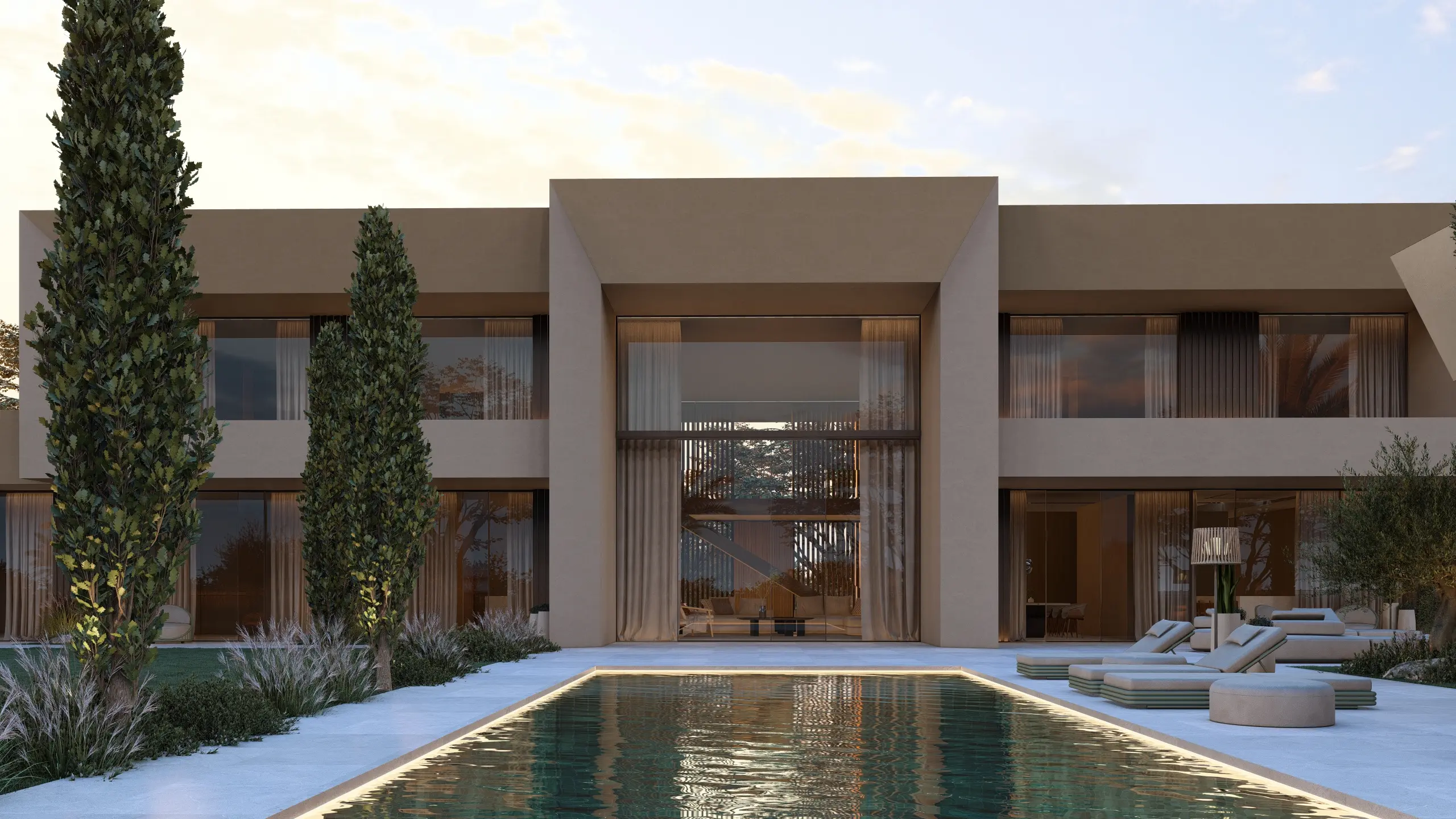
Residential areas in Texas are characterized by a well-established model: the typical American subdivision, where houses are repeated under a common language pitched roofs, predictable compositions, and recurring materials. This pattern creates homogeneous environments in which it is difficult to distinguish one house from another.
This is where the opportunity emerges to do something different: to introduce more contemporary homes, with greater spatial freedom and a distinct architectural identity.
Adapt, don't replicate
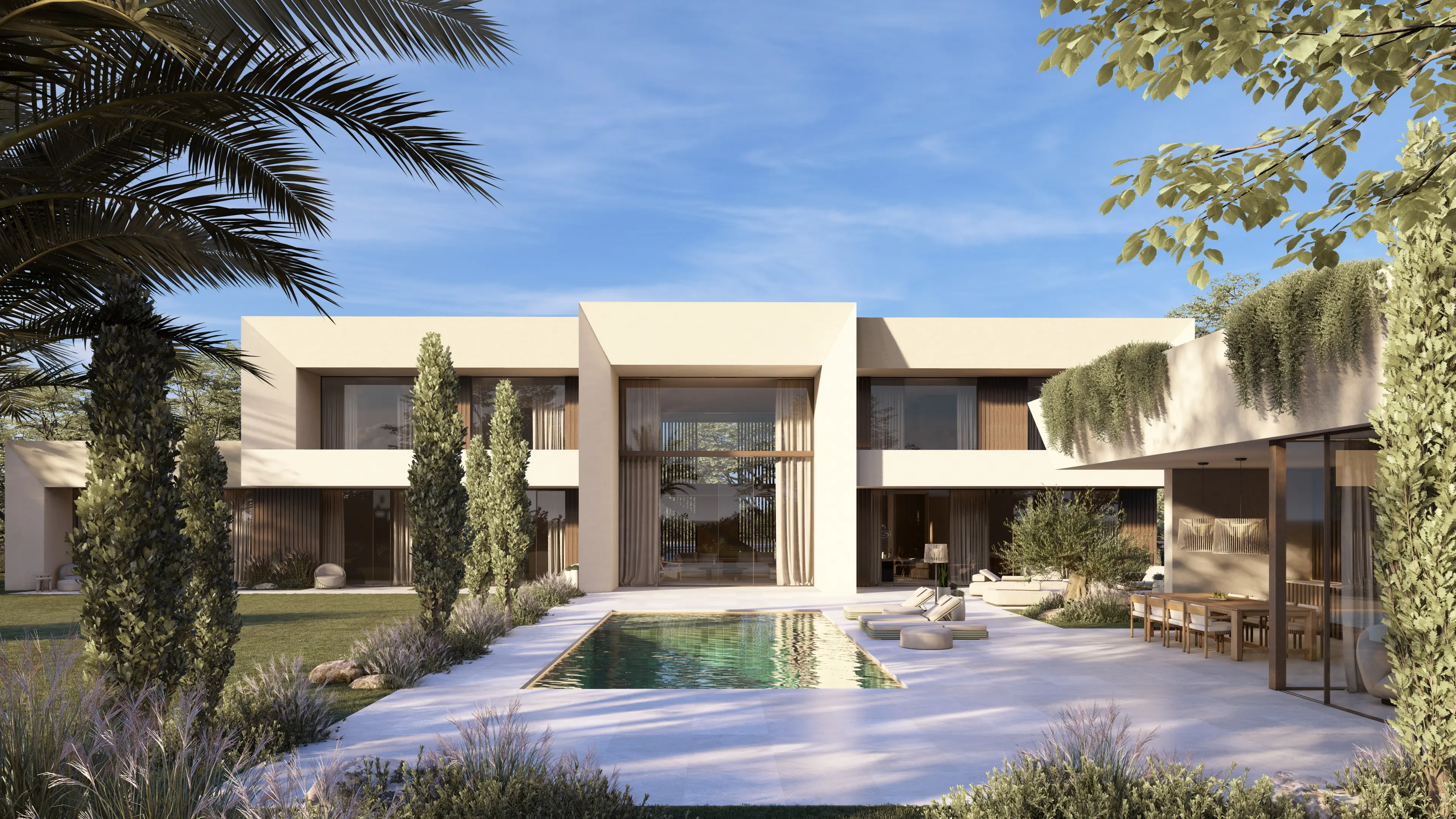
Our work focuses on the complete development of the architectural design and the full definition of each house. The homes will be built in Texas under the supervision of a local technical team.
This is not about transferring an architecture from one context to another, but about reinterpreting it. Each project is developed from the real conditions of the site: climate, way of living, construction system, and client expectations.
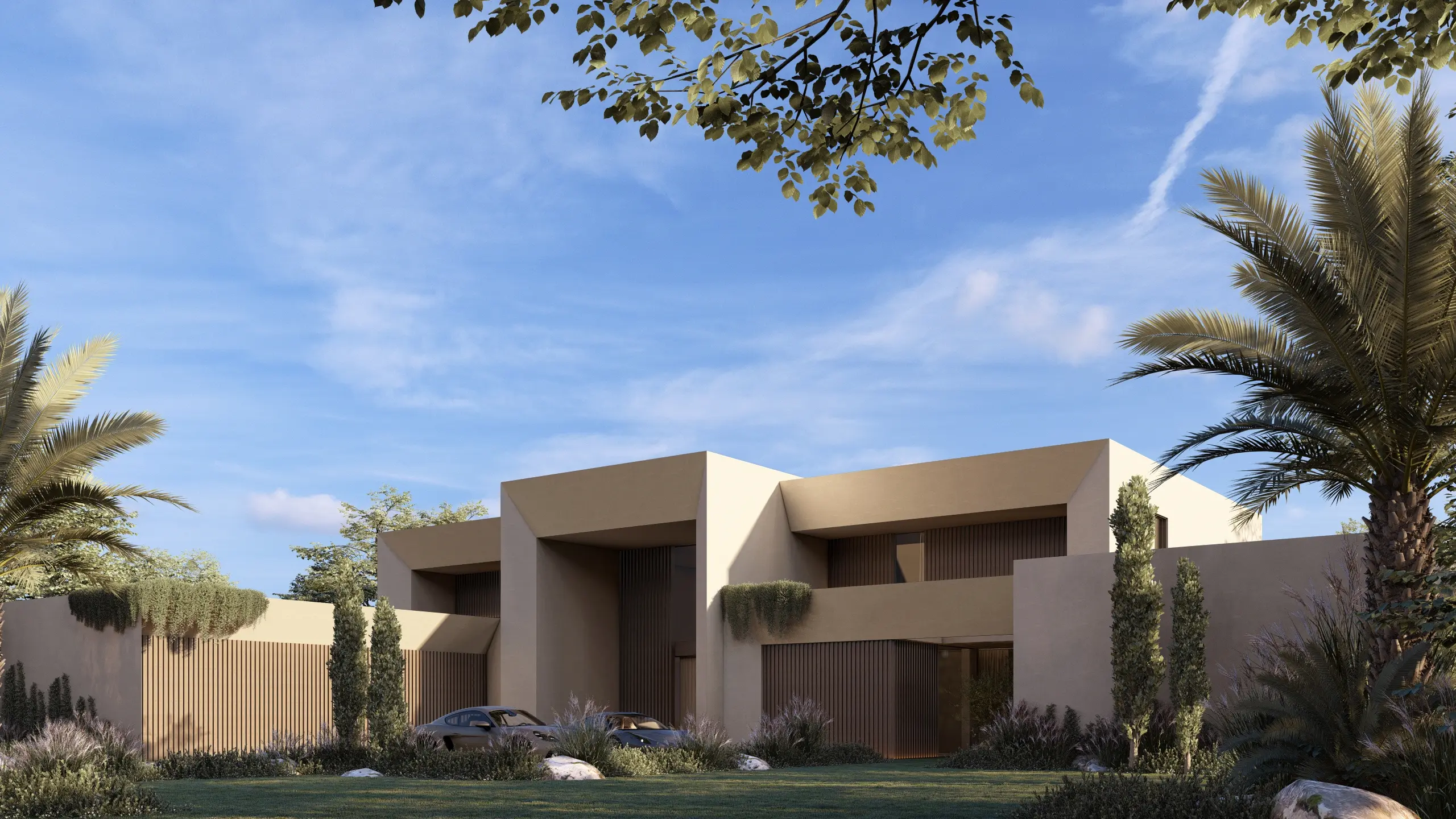
The American home follows a different residential logic, particularly in Texas, where scale, mobility, and daily habits strongly influence the project. Garages must accommodate multiple vehicles, typically larger in size; service areas, storage, and laundry spaces carry greater importance; and the house incorporates interior spaces designed for a variety of uses throughout the day. In contrast to a Mediterranean culture more rooted in the relationship with the outdoors (shade, terraces, and patios) this context requires homes capable of resolving many functions within a broader and more complex domestic structure.
Contemporary Mediterranean as a starting point
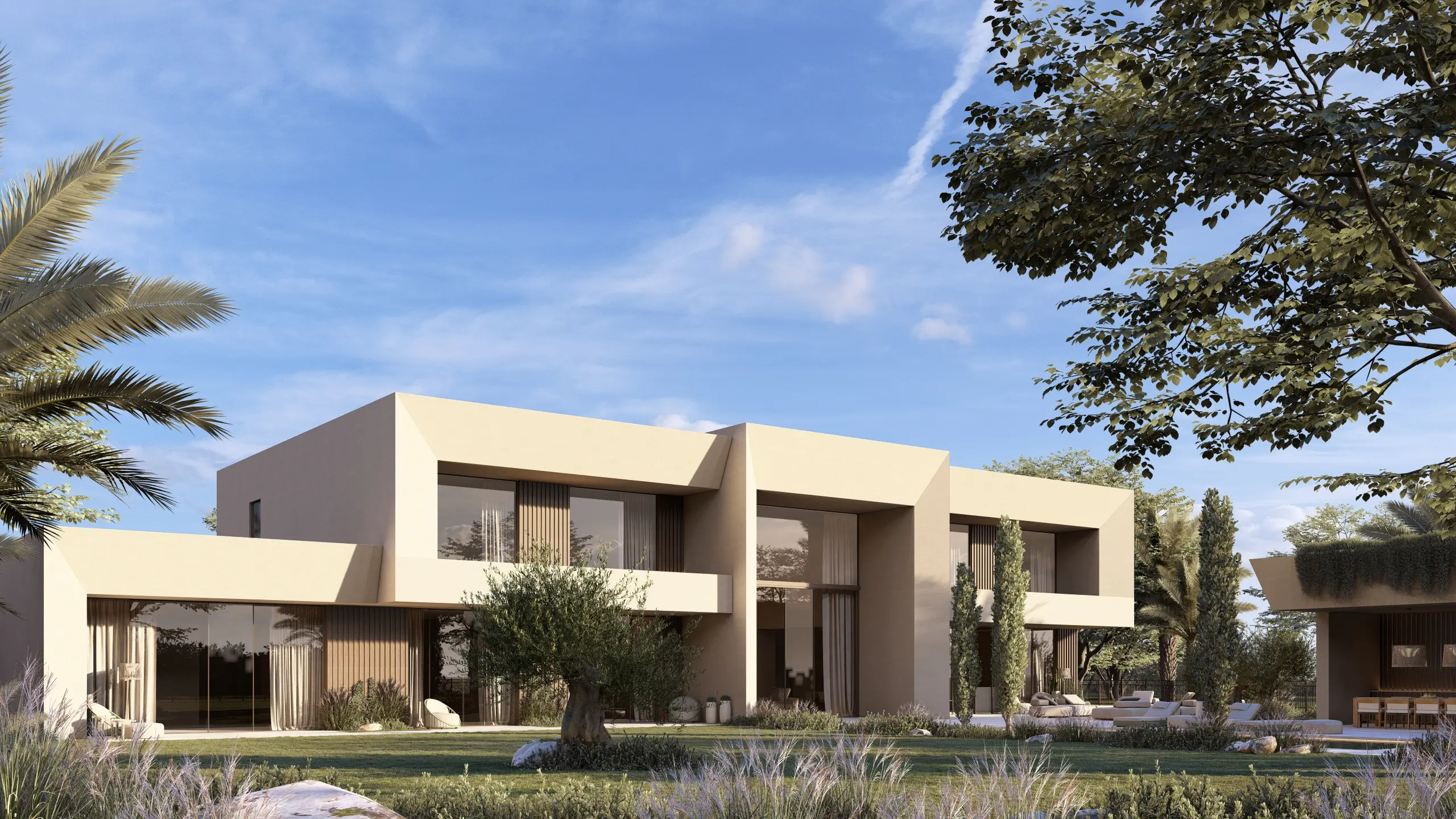
Flat roofs, by contrast, allow for greater freedom, enabling each space to be tailored precisely to its function while also facilitating the incorporation of terraces and outdoor areas.
For this reason, more flexible geometries are not the result of a formal gesture, but of a well-resolved program. Form emerges as a consequence.
When working in Texas, this way of designing is not transferred literally. It is adapted to the context, maintaining its principles while adjusting to a different culture, climate, and construction system.
A also technical change
Working in the United States involves adapting to a different construction system. Lightweight timber structures( common across much of the country) prevail, along with a dimensional logic based on the imperial system (feet and inches) rather than the metric system.
It is not just a matter of units, but of how buildings are modulated and constructed.
In this process, the professional experience of architect Jaime Salvá in San Francisco between 2005 and 2006 has been key, enabling a clear understanding of these systems and allowing the work to develop naturally within this context.
A growing line of work
We are currently developing the first projects, and construction is set to begin shortly. As they take shape, we will continue to share their progress and the insights gained throughout the process.
The interest generated by this line of work has led to the formalization of an exclusivity agreement in Texas. The developer anticipates that, once the first homes are completed, they may generate significant demand and attract the attention of other local developers.
This project marks the beginning of a line of work that we will continue to develop across different contexts, always guided by the same premise: to adapt architecture to each place with rigor, seeking specific solutions with a distinct identity.